Enjoying wine is about far more than what’s in the bottle. From the first swirl to the final sip, the right glassware can elevate an ordinary pour into a sensory experience. A well-chosen glass not only flatters the wine but also unveils its full story, its aroma, flavour, intensity, length, and texture.
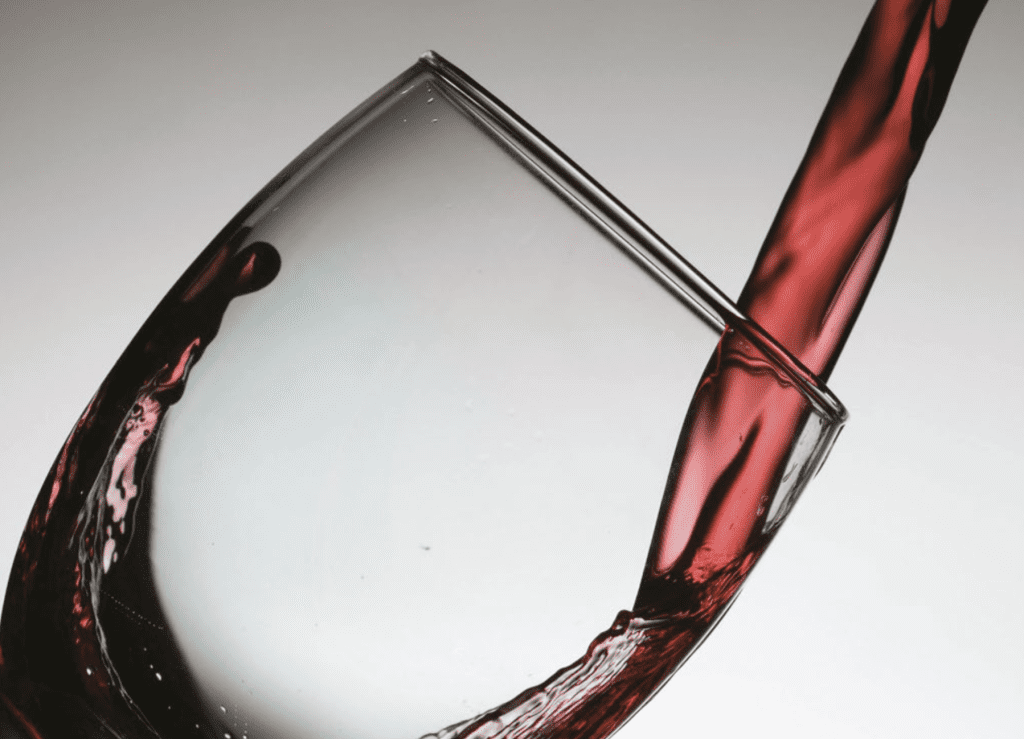
Why shape matters
Wine glasses are designed with a purpose. A large, rounded bowl gives red wines the space they need to breathe, open up, and release complex aromas. White wines, by contrast, often shine in narrower bowls that preserve freshness and direct delicate scents towards the nose. Sparkling wines benefit from tall, slender flutes or tulip shapes that maintain effervescence, while dessert wines are usually served in smaller glasses that focus sweetness and aroma. Simply put: the glass is not just a vessel, it’s a tool.
Pioneers and benchmarks
Few names have shaped this understanding as much as Riedel, the house that introduced varietal-specific glasses. Their work showed how the curve of the bowl, the width of the rim, and even the thickness of the crystal could alter how wine tastes. Alongside Riedel, boutique producers such as Zalto have set benchmarks for elegance with their feather-light, hand-blown creations, widely regarded as some of the most refined glasses in the world.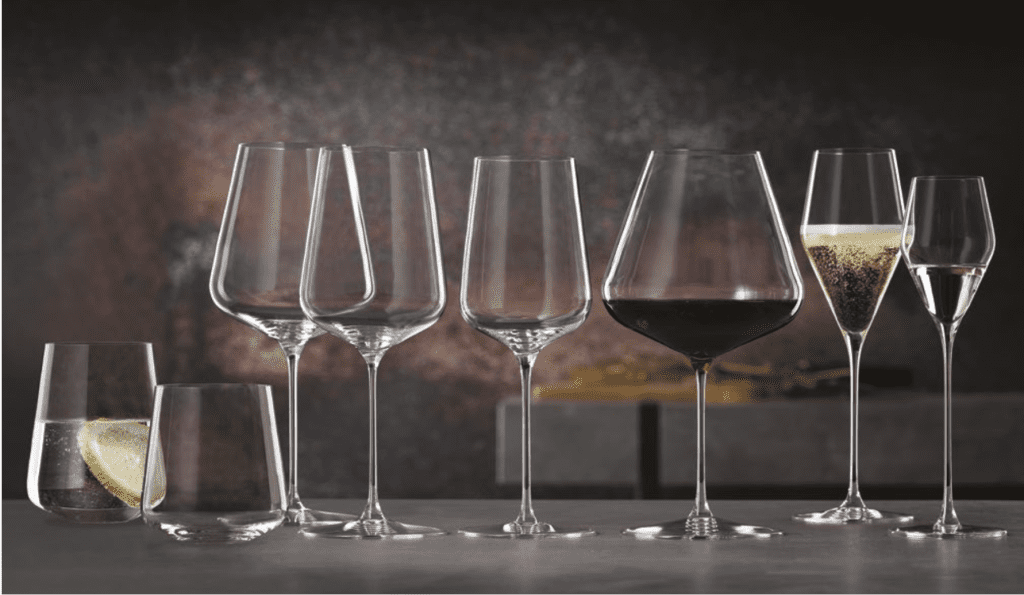
Spiegelau and Nachtmann glasses available at Farsons Direct
Quality at home
Of course, not every table calls for a cellar full of fragile, hand-blown stems. For those seeking professional-grade glassware that balances beauty, quality, and practicality, Spiegelau and Nachtmann deliver just that. Both are produced in the same facilities as Riedel, with the same uncompromising standards, yet are designed to be more accessible for everyday use.
Spiegelau has become especially popular thanks to ranges like Definition, known for its fine, lightweight stems, and the new Hi-Lite collection, which marries precision with remarkable value. Nachtmann, on the other hand, brings artistry into play; their Noblesse and Vivendi collections combine durability with a design-forward look that adds character to the table.
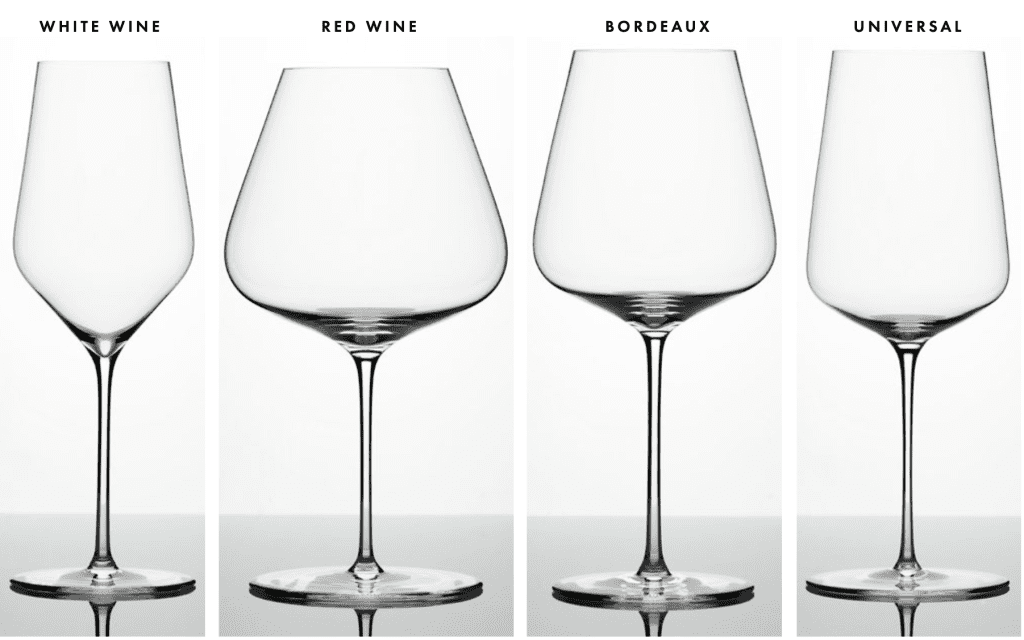
Zalto Glasses available from Philippe Martinet Fine Wines, 239 Tower Road, Sliema
The home essentials
Building a stemware collection doesn’t need to be overwhelming. For most wine lovers, a small but versatile set covers all bases. Start with one generous red wine glass – or, for the enthusiast, two: a wide-bowled Burgundy glass for Pinot Noir and delicate reds, and a taller Bordeaux glass for structured varieties like Cabernet Sauvignon. Add one good white/universal glass, versatile enough for everything from Sauvignon Blanc to Chardonnay (although for top white burgundies, you can also use a Pinot Noir glass). For sparkling wines, skip the traditional flute and opt for a tulip-shaped glass that both preserves bubbles and enhances aroma. And don’t forget a sturdy, stylish water tumbler – an essential companion to any wine service. Many leading glassmakers offer bundles that include three or four different styles, making it easy to build a well-rounded collection without overcomplicating things.
Caring for your glassware
Even the perfect glass will disappoint if not properly cared for. Residual detergent, musty cupboards, or streaks can dull both appearance and aroma. The golden rules: rinse glasses with hot water, avoid strong soaps, and always dry with a lint-free polishing cloth used exclusively for glassware (ask your local supplier of glassware). Hold the bowl and stem separately while polishing to avoid breakage, and store them upright, away from kitchen odours. The reward is a sparkling, neutral canvas for your wine.
The final pour
Ultimately, glassware is about respect. Respect for the gifts of nature, for the winemaker’s craft, for the occasion, and for yourself. The right stem can elevate even a modest bottle, making everyday moments feel special. Whether it’s a structured red in a broad bowl, a crisp white in a tapered stem, or a celebratory fizz in a flute, the glass completes the experience.
So next time you reach for a bottle, pause before you pour. Choose a glass that lets the wine shine. Because if the wine matters, so should the glass.